GPS GNSS Machine Control Overview
Silent promotional video · 39.5 seconds

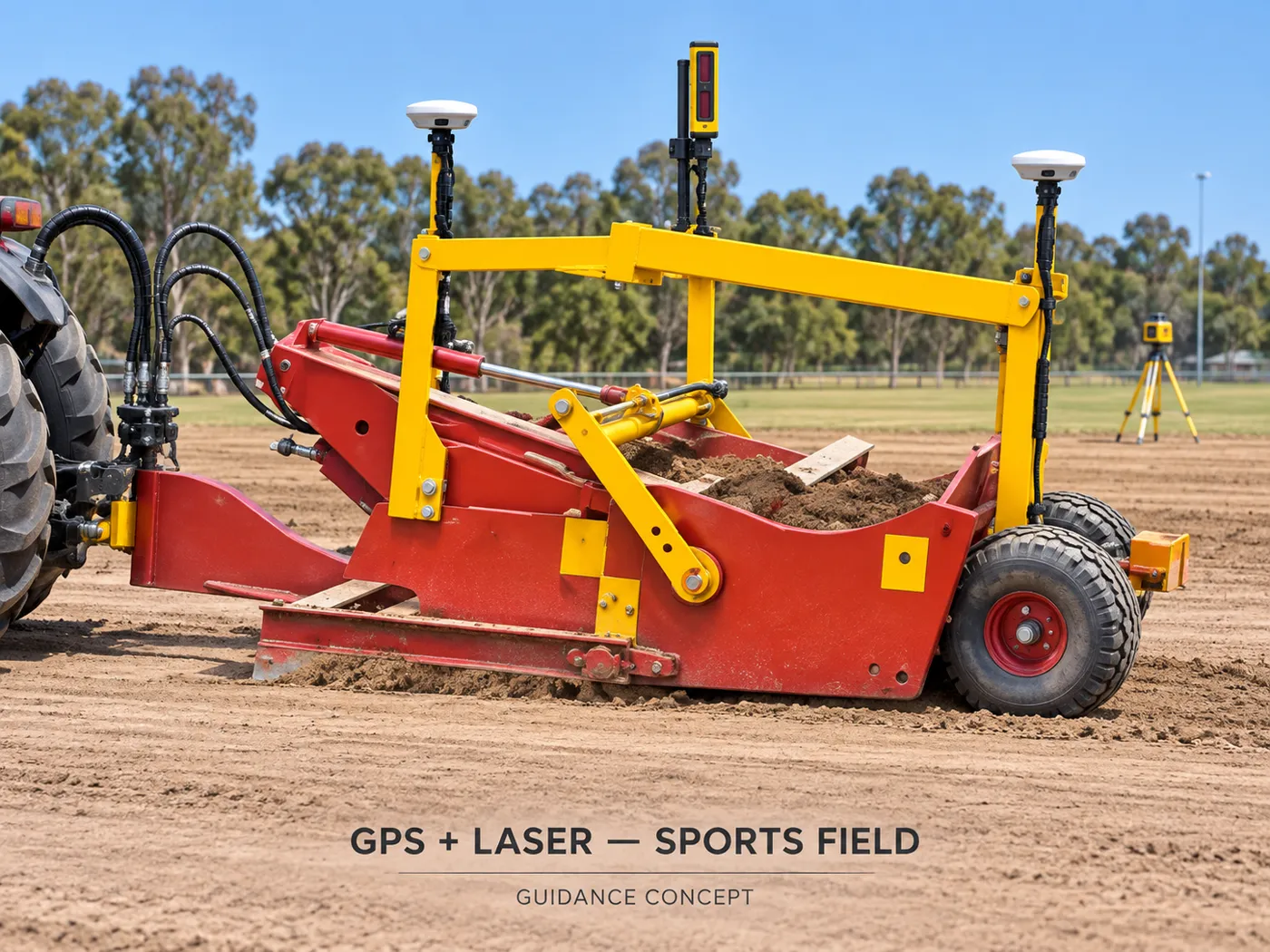
Mount positioning equipment so it can support the grading workflow without confusing the technology with the land-management plan.
GNSS/GPS provides position and elevation information subject to the selected system, corrections, calibration and site conditions. The design surface or operator plan determines the target.
Mounting height, rigidity, vibration, line of sight, cable routing, protection, service access and compatibility with the receiver/control system should be assessed.
Achievable grading performance depends on the complete system, calibration, machine response, site conditions, operator/control setup and project requirements.
GPSGNSSRTKreceiver mount
The receiver platform is an integration point between the grading machine and the selected positioning/control system. Its job is to support equipment in a stable, serviceable position while respecting the geometry and operating environment of the machine.
Mast position, rigidity, vibration, receiver height, visibility and protection can affect practical operation. The mounting arrangement should be compatible with the selected control system.
Where RTK GNSS is used, corrections may come from a suitable base or network service. Coordinate system, design surface, calibration and field checks must be managed by the chosen system and operator.
Power, cable routing, controllers, sensors, cameras and hydraulic-control interfaces should be considered as a system, with protection from vibration, soil, moisture and accidental damage.
GPS/GNSS is a measurement and guidance technology. Finished accuracy depends on the complete system, setup, corrections, calibration, machine response, site conditions and verification method; the platform alone should not be used to promise a particular accuracy.
Silent promotional video · 39.5 seconds