Grading Control and Machine Design Animation
Silent promotional video · 36.5 seconds

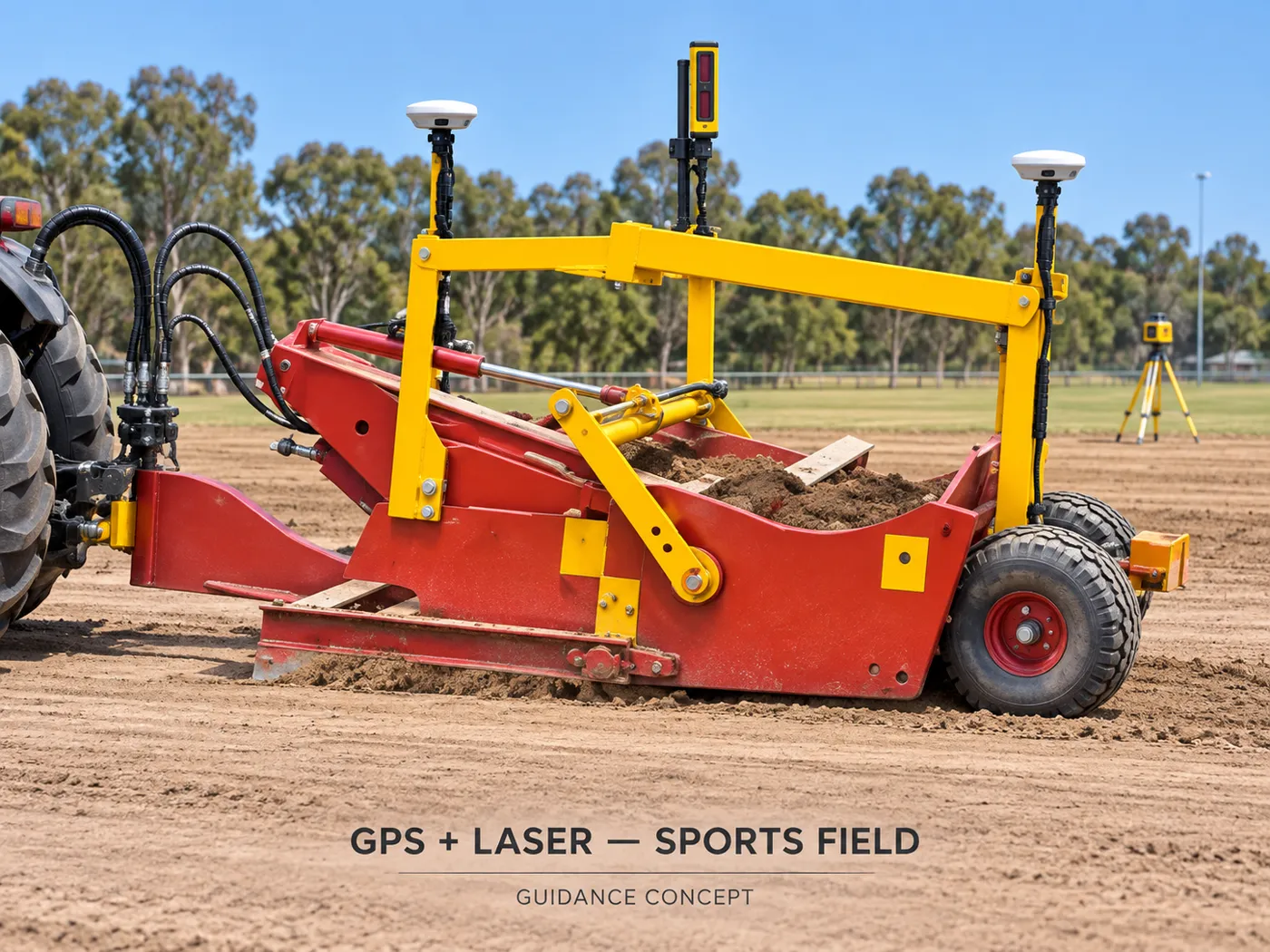
Support laser receivers used to reference a designed level or slope.
A transmitter establishes the reference plane; the receiver detects machine position relative to that plane. The target grade still comes from the project or land-management plan.
Mast rigidity, receiver visibility, vibration, protection and repeatable setup are important platform considerations.
laser gradinglaser receiverland levelling
A laser grading system normally establishes a reference plane or slope with a transmitter and detects that reference with a machine-mounted receiver. The receiver/platform arrangement must remain compatible with the chosen system and grading geometry.
Transmitter position, benchmark, single- or dual-slope settings, range and line of sight affect the usable reference across the site.
Receiver mast position, height, rigidity, control box, wiring and hydraulic response should be calibrated as a complete system rather than as isolated components.
Obstructions, transmitter disturbance, changing machine conditions and site geometry can introduce errors. Independent checks of the finished surface remain important.
Laser provides the reference; the landforming, drainage or construction plan defines the desired surface; the scraper performs the physical grading work.
Silent promotional video · 36.5 seconds